Showing posts with label colostomy friends. Show all posts

Saturday, October 4, 2014

How can I stop my colostomy bag from smelling?


How can I stop my colostomy bag from smelling?


Check Your diet

Some foods are particularly likely to cause a smell. You could try reducing or cutting out
  • Onions
  • Cabbage, sprouts and similar vegetables
  • Beans
  • Strongly spiced foods, or foods with a lot of garlic
  • Beer and other gassy drinks
  • Very rich or fatty foods
You may need to try out various foods to find which ones cause wind for you.

Use Anti odour products

There are products that can help to mask the smell from a colostomy. They are often liquids, and you use a few drops each time you change your bag. These are a last resort, because you shouldn't have this problem if at all possible. But some people have a lot of difficulty finding the perfect fit from a colostomy bag and these products can then help.

Select Correct Type of colostomy bag

There are many different types of colostomy bag. Different ones suit different people. So you might have to try a few before you find the one that suits you best. Some have charcoal filters built into them. Charcoal is good for absorbing smells and the filter lets gas escape from the bag so that it does not become too full and uncomfortable. If the bag fits properly you should only be aware of the smell when you are changing or emptying the bag.
Stomas are different shapes and sizes. So, some bags may not fit you and others will. If the bag does not fit properly you are likely to have problems with smell and possibly leakage. You could get in touch with a stoma nurse at your hospital. Specialist stoma nurses can get different types of bags for you to try. And they will help you fit them.


Thursday, December 12, 2013

Inspecting Your Stoma for any Problems

Checking a stoma

At each pouch change, check your stoma for color, shape and function. Watch for stenosis, prolapse or swelling. Urostomates should be on the lookout for crystal formation. Be conscious of any stoma complication.

Bleeding stoma
A bleeding can occur with rubbing of the stoma because the mucous membrane, out of which the stoma is formed, is highly vascular. The bleeding usually stops quickly otherwise, see a doctor.

Can a stoma get cut?
Cuts or lacerations of the stoma can occur and some can be quite serious. Since a stoma has no sensory nerves, it can get without causing no pain. Causes of stoma laceration can include
1) shifting of wafer or pouch
2) too small an opening of the pouch
3) incorrect pouch application etc

How should a stoma be protected?
Protect stoma's from direct physical blows, tight clothing and belt buckles.

Tuesday, June 25, 2013

Notice of Ostomy Meeting


Announcement:
May get together and meeting po ang mga ostomates sa National Kidney Institute sa darating na Friday. Ang NKI ay nasa East Avenue, Quezon City. Ang venue po ay sa Conference room 1. Ito ay mula 2:00 pm hanggang 3:30 pm.

Sana po ay makadalo kayo. Para sa mga ibang katanungan maari po kayo mag text sa 0926(7685887).
May mga libre na ibibigay na colobags na convex type and mga flat one piece pouch para sa nangangailangan. Maraming salamat po.

Friday, April 12, 2013

Ostomy Lay Forum


Invite namin ang mga ostomates na sumali sa aming lay forum sa April 25, 2013
Sana po ay makadalo po kayo.


Tuesday, March 26, 2013

SSS Sickness and Disability Benefits

Sana makapagtulungan tayo kung ang isang ostomate ay maari makapag claim sa SSS. Kung may mga additional info katulad ng pag post ni Sir Anton and Sir Jun, baka makatulong sa atin lahat.


FB Account of SSS

Meron silang video file regarding paano mag file ng disability pero ang question ay considered disability ba ang colostomy. Sana matugunan natin ito.

Ang contact number ng SSS ay (632) 920-6401 or 920-6446 at member_relations@sss.gov.ph.

SSS Sickness Benefit
The sickness benefit is a daily cash allowance paid for the number of days a member is unable to work due to sickness or injury.
A member is qualified to avail himself of this benefit if:
  • he is unable to work due to sickness or injury and is thus confined either in the hospital or at home for at least four days;
  • he has paid at least three monthly contributions within the 12-month period immediately before the semester of sickness;
  • he has used up all current company sick leaves with pay for the current year;
  • he has notified his employer or the SSS, if he is a separated, voluntary or self-employed member
Sickness Benefit Computation
The amount of an employee’s sickness benefit is computed as the daily sickness allowance times the approved number of days. Effective May 24, 1997, the daily sickness allowance is 90 per cent of the average daily salary credit.
The sickness benefit is computed by:
  • Excluding the semester of sickness. A semester refers to a period of two consecutive quarters ending in the quarter of sickness. A quarter refers to a period of three consecutive months ending on the last day of March, June, September or December.
  • Counting 12 months backwards starting from the month immediately before the semester of sickness.
  • Identifying the six highest monthly salary credits within the 12-month period. Monthly salary credit means the compensation base for contributions and benefits related to the total earnings for the month. (The maximum covered earnings or compensation increases by P1,000 beginning at P7,000 in 1994 and every January of each year thereafter until the maximum of P12,000 is reached.)
  • Adding the six highest monthly salary credits to get the total monthly salary credit.
  • Dividing the total monthly salary credit by 180 days to get the average daily salary credit.
  • Multiplying the average daily salary credit by 90 per cent to get the daily sickness allowance.
  • Multiplying the daily sickness allowance by the approved number of days to arrive at the amount of benefit due.
Eligibility
A member can be granted sickness benefit for a maximum of 120 days in one calendar year. Any unused portion of the allowable 120 days sickness benefit cannot be carried forward and added to the total number of allowable compensable days in the subsequent year.
The sickness benefit shall not be paid for more than 240 days on account of the same illness. If the sickness or injury still persists after 240 days, the claim will be considered a disability claim
SSS Disability Benefits
Disability benefit is a cash benefit paid to a member who becomes permanently disabled, either partially or totally.
A member who suffer partial or total permanent disability, with at least one monthly contribution paid to the SSS prior to the semester of contingency, is qualified.
The complete and permanent loss of use of any of the following parts of the body fall under permanent partial disability:
  • one thumb one big toe
  • one index finger one hand
  • one middle finger one arm
  • one ring finger one foot
  • one little finger one leg
  • hearing of one ear one ear
  • hearing of both ears both ears
  • sight of one eye
The following fall under permanent total disability:
  • complete loss of sight of both eyes;
  • loss of two limbs at or above the ankle or wrists;
  • permanent complete paralysis of two limbs;
  • brain injury causing insanity; and
  • other cases as determined and approved by the SSS.
There are two types of this benefit. They are:
  • the monthly pension; and
  • the lump sum amount.
The monthly pension is a cash benefit paid to a disabled member who has paid at least 36 monthly contributions to the SSS prior to the semester of disability.
The lump sum amount is granted to those who have not paid the required 36 monthly contributions.
The amount of the monthly pension will be based on the member’s number of paid contributions and his years of membership.
The lowest monthly pension is P1,000 for members with less than 10 calendar years of service (CYS); P1,200 for those with at least 10 CYS and P2,400 for those with at least 20 CYS.
For permanent total disability, the lump sum is equivalent to the monthly pension times the number of monthly contributions paid to the SSS or the monthly pension times 12, whichever is higher.
For permanent partial disability, the lump sum is equivalent to the monthly pension time the number of monthly contributions times the percentage of disability in relation to the whole body or the monthly pension times 12 times the percentage of disability, whichever is higher.
In addition to the monthly pension, a supplemental allowance of P500 is paid to the total or partial disability pensioner. The allowance will provide additional financial assistance to meet his extra needs arising from his disability.
As a disability pensioner, he and his dependents are also entitled to Medicare benefits under the administration of the Philippine Health Insurance Corporation (PhilHealth).
Only totally and permanently disabled members will receive a lifetime monthly pension. However, this pension will be suspended if the pensioner recovers from his illness, resumes employment or fails to report for physical examination when notified by the SSS. The member may request for a domicilliary or a home visit if his disability inhibits his activity.
The monthly pension of a partially disabled member is limited to a certain number of months according to the degree of his disability. If with deteriorating and related permanent partial disability, the percentage degree of disability of the previously granted claim shall be deducted from the percentage degree of disability of the present claim.
The monthly pension is given in a lump sum if it is payable for less than 12 months.
Sunday, March 24, 2013

Colostomy Reversal

Colostomies divert stool from the colon to an opening on the abdominal wall. While many colostomies are permanent, some are placed temporarily to allow damaged bowel to heal after infection or removal of a portion of the intestine. In these cases, the bowel is later sewn back together, a procedure called a colostomy takedown, although in around 8 percent of cases, the bowel can't be reconnected as planned, the Colostomy Association states. Colostomy reversal can be done through an open incision or laparoscopically, using very small incisions. Serious complications can ensue during or after a colostomy reversal.


Sunday, March 10, 2013


Looking for a ostomy support group, join us at colostomy friends. We are forming support groups among young people. We have meetings where we share experiences and enjoy each others company. Help us plan outings and other activities for young ostomates (teenagers).

Kung gusto sumali, maaring mag text sa 0926.768.5887 para sa mga katanungan. Hindi lang kabataan ang bumubuo ng mga grupo, may mga senior citizens na may colostomy bag ay hinihikayat rin namin na sumali sa mga meeting. Maraming salamat po.

Posted by:
Ron

Sunday, March 3, 2013

Colostomy Friends of the Philippines (Facebook)


Please add us in our new Facebook Page Account, Post po your questions and suggestions to make ostomy advocacy in the Philippines strong. Thank you very much.

Thursday, January 17, 2013

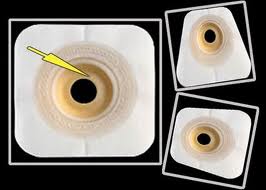
Convex Wafers

If you need this colostomy bags for better quality of life, contact us. Priority to poor patients in the Philippines. It is not for sale.


If you will use a convex wafer with a stoma that is NOT recessed, the wafer or flange might just be wasted.

Monday, November 12, 2012

People with 2 Colostomy Bags

One of our readers asked why some have 2 colostomy bags:

The following are the possible answers gathered from friends.

Photo courtesy of Phil Esgate (http://philostomate.blogspot.com/)

1. Possibly to rest one stoma for awhile? One may be more for mucous rather than legit output.

2.  They sometimes have two after a difficult surgery with a contaminated abdomen. One will produce only mucus. Or they could have a colostomy/ileostomy and a urostomy. Urostomy would be if urinary bladder was removed due to cancer or trauma.

3. Yes. If there are birth defects/injuries where there is a neurogenic branded such as spinal cord injury or spina bifida. Spina bifida patients usually have a "button" urostomy. So many situations that can lead to it.

4. A double barrel ostomy forms 2 stomas. One is nonfunctioning meaning that no feces is expelled, yet mucous is discharged so sometimes it is called a mucous fistula. Sometimes this is sewn shut and left in abdomen which then expels mucous through there.

Thanks by Clostomy Friends
Please join our National Federation of Ostomates. Email us at colostomyfriends@gmail.com (Jean)

Tuesday, November 6, 2012

Ostomy Wound Care tips

Caring for a Wound

Special care must always be taken when caring for a wound:
  1. Before dressing a wound, clean it thoroughly with sponges and cleansing solution. Do not allow scab to form in the wound which will cause infection. Use a gauze with saline solution to scrub of the wound. In case it bleeds, just put pressure with gauze until bleeding stops.
  2. Also, remove any body hair which also contributes to infection.
  3. Pat the wound dry with a different, clean sponge.
  4. When the wound is clean and dry, apply the dressings appropriate to the severity of the wound.
  5. When removing old dressings, always remove one layer at a time, not all at once.
Remember:
Calmoseptine and Desitine is for rashes and allergies while Silver Sulfadiazine is for wound treatment.

You can add anymore tips for ostomy wound care.
Salamat po - Jean Pablo

Wednesday, October 17, 2012

Basic Ostomy Skin Care

People who have a stoma often share many of the same questions and concerns.
This best practice document provides answers to some of the common questions that people ask about the day to day care of the stoma and the surrounding skin. The answers are directed to the person who has a stoma but may also be helpful for the nurse as a teaching tool.

People with a stoma often worry that their skin may become irritated from the stool, urine, or pouching system. It is important  to treat the skin gently, protect it from stool, urine, and chemicals, and use products correctly to decrease the chance for skin problems

The Bag of Life: The Filipino Ostomates

 
In a country where there is so little awareness about having a colostomy bag, there is so much misconception and wrong information that circulates in mainstream society. This is only a secondary consideration since wearing a colostomy bag is not a way to feed on the curiosity of people. The initial reaction of many people is varied. Some get so surprised and curious while others get so excited making it such a big deal. On the other hand, there are some who knows how to empathize in understanding such conditions. In one-way or another, I believe that the latter have similar stories to share.

It boils down to positive information that brings awareness. This is the bigger story. In order to send the correct signal and strong consciousness to other people is for ostomates to support each other and strengthen one’s ranks. It is very sad for people having the bag to think so little of one self when the possibilities for a quality of life is still one and the same. I encountered people who have fallen desperately to depression because of the inability to accept having a bag. It was not colon cancer that took away his life but the depression and the feeling of disgrace. It is the opportunity presented in the celebration of World Ostomy Day to celebrate new life. It is the bag that saved lives.

Whenever I get the chance to attend speaking engagements during a lay forum with ostomates and doctors alike, I always say in my opening statement that having the bag is not that bad at all. One of the perks we enjoy is that we no longer have to rush and run when we have to use the toilet. This will send smiles to the faces of ostomates but I go deeper to my message. It has been for a long time that society dictates how unacceptable a colostomy bag can be. This time around we are here to disprove that it is not the colostomy bag that runs our life. In fact, we control our life and it is not the other way around. There have been a lot of success stories that ostomates have achieved and trials overcomed that tells the world “yes we can”. October too is breast awareness month but it has more appeal and acceptance than ostomy awareness. Both are diseases that battle cancer but the latter does not enjoy good billing in society. Yet, ostomates grab this second chance to life proving to inspire others and spread awareness.

When World Ostomy Day is celebrated in the Philippines, I get the chance to meet ostomates from different parts of the country. At first, 6 years ago after my surgery, I felt so isolated and alone that I might be the only person with this kind of special condition. I never thought that there were “others” too. I have started building support groups in different hospitals and lo and behold, there have been a few who have courageously responded to join and step forward.  I have also established the National Federation of Ostomates of the Philippines with the help of some friends. I realized there are a lot more who are a special lot with this kind of special condition. It takes a lot of work and initiative to invite people with a personal touch to create self-supporting groups where ostomates help ostomates. It is not a far-fetched vision but a doable one. It will take time but very achievable. The partnership we built with the Department of Health in supporting the advocacy of building ostomy support group for patients has been well supported by Chief of Hospitals and the Surgery Departments and above all the Secretary of Health Dr. Enrique T. Ona himself. We open our lines to continue this advocacy to reach out to poor and indigent ostomates empowering them that life is good, training them to assist and counsel fellow ostomates, and cover the whole islands of the Philippines to announce that having a bag is an extension of life. Copyright (c) (Ronaldo Lora) October 15, 2012

Monday, September 24, 2012

National Federation of Ostomates of the Philippines


Invitation for patients with colostomy to join our meeting. Please text or call our number for head count. No Registration needed. Topics: Ostomy Group Sharing, Visitor Training, Hospital Visits and fellowship.

Thank you very much
When: October 5, 2012
Where: Conference Room 1 (2nd Floor)
Why: Building of Ostomy Groups
Time: October 5, 2012 - 10:00 am

Monday, August 6, 2012

The Anatomical Apron (C)


The Anatomical Apron (C)

Learn the difference between colostomates and ileostomates

Tuesday, January 31, 2012

Dress in Blue

Help raise awareness about colon cancer, celebrate survivors and help patients in need during National Colerectal Month. Dress in Blue to celebrate your activities

Friday, November 25, 2011

Ostomy Support Group Venue national kidney and transplant insitute


Hello fellow Ostomates,

We will have a get together on December 9, 2011 at National Kidney Institute for a meeting and a support group. Hope that you can come. Please pass the word.

Salamat po.

Colostomy Friends

Friday, November 18, 2011

Ostomates Gathering

Please stay tuned for announcements regarding ostomates gathering this December 2011.

It will be like getting to know activity with other ostomates.
Will keep you posted on time, date and place.
Thank you.

Wednesday, April 27, 2011

What is a Urostomy?

  • The urinary system is made up of the kidneys, two ureters, bladder and the urethra. The kidneys produce urine and the urine travels through the ureters (tubes) to the bladder where it is stored. The urine then leaves the body through the urethra. The creation of a urostomy is a surgical procedure in which the urine bypasses the bladder. The urine leaves the body through an opening in the abdomen called a stoma instead of leaving through the urethra. During surgery, your bladder may be left in place or it may be removed.
    Picture of the urinary system


  • To create a passageway for the urine to travel from the ureters to the stoma, a portion of the colon is used. A portion of the colon is cut and the main colon is then reconnected for normal bowel function. The ureters are detached from the bladder and attached to the portion of colon that was cut. The end of this portion of the colon is then brought to the surface of the abdomen to allow the urine to leave the body. The urine drains into a watertight pouch (bag). The bag is attached to the skin with an adhesive (substance that seals the pouch to the skin).

  • A urostomy is needed when the bladder does not work properly due to certain health conditions. Some of these include bladder cancer, neurologic (brain and nerve) conditions, birth defects, and inflammation of the bladder.