To avoid leakage for recessed stomas, used convex ostomy bags and appliances. Please watch video.
Showing posts with label Free Ostomy Convex Wafer and Bag. Show all posts
Showing posts with label Free Ostomy Convex Wafer and Bag. Show all posts
Sunday, November 19, 2017
Advantage of Convex Ostomy Bags
To avoid leakage for recessed stomas, used convex ostomy bags and appliances. Please watch video.

Thursday, January 17, 2013
Convex Wafers
If you need this colostomy bags for better quality of life, contact us. Priority to poor patients in the Philippines. It is not for sale.
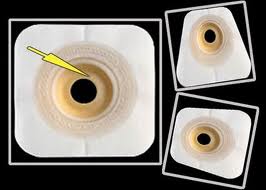


If you will use a convex wafer with a stoma that is NOT recessed, the wafer or flange might just be wasted.

If you will use a convex wafer with a stoma that is NOT recessed, the wafer or flange might just be wasted.
Wednesday, January 16, 2013
Recessed Stoma
Recessed Stoma is where the stoma is retracted creating a space that is deep around the peristomal area.

The best way to prevent leakages is through stoma paste or much better the use of Convex Flanges or wafers.

We are providing convex colostomy bags for patients with recessed stoma. Contact us.
Priority if for poor patients in the Philippines.

The best way to prevent leakages is through stoma paste or much better the use of Convex Flanges or wafers.

We are providing convex colostomy bags for patients with recessed stoma. Contact us.
Priority if for poor patients in the Philippines.
Thursday, March 17, 2011
Abdominal Adhesions
What are abdominal adhesions?
Abdominal adhesions are bands of tissue that form between abdominal tissues and organs. Normally, internal tissues and organs have slippery surfaces, which allow them to shift easily as the body moves. Adhesions cause tissues and organs to stick together.

Although most adhesions cause no symptoms or problems, others cause chronic abdominal or pelvic pain. Adhesions are also a major cause of intestinal obstruction and female infertility.
Abdominal Adhesions Overview
An adhesion is a band of scar tissue that binds 2 parts of your tissue together. They should remain separate. Adhesions may appear as thin sheets of tissue similar to plastic wrap or as thick fibrous bands.
The tissue develops when the body's repair mechanisms respond to any tissue disturbance, such as surgery, infection, trauma, or radiation. Although adhesions can occur anywhere, the most common locations are within the stomach, the pelvis, and the heart.
What causes abdominal adhesions?
Abdominal surgery is the most frequent cause of abdominal adhesions. Almost everyone who undergoes abdominal surgery develops adhesions; however, the risk is greater after operations on the lower abdomen and pelvis, including bowel and gynecological surgeries. Adhesions can become larger and tighter as time passes, causing problems years after surgery.
Surgery-induced causes of abdominal adhesions include
* tissue incisions, especially those involving internal organs
* the handling of internal organs
* the drying out of internal organs and tissues
* contact of internal tissues with foreign materials, such as gauze, surgical gloves, and stitches
* blood or blood clots that were not rinsed out during surgery
A less common cause of abdominal adhesions is inflammation from sources not related to surgery, including
* appendicitis—in particular, appendix rupture
* radiation treatment for cancer
* gynecological infections
* abdominal infections
Rarely, abdominal adhesions form without apparent cause.
How can abdominal adhesions cause intestinal obstruction?
Abdominal adhesions can kink, twist, or pull the intestines out of place, causing an intestinal obstruction. An intestinal obstruction partially or completely restricts the movement of food or stool through the intestines. A complete intestinal obstruction is life threatening and requires immediate medical attention and often surgery.
What are the symptoms of abdominal adhesions?
Although most abdominal adhesions go unnoticed, the most common symptom is chronic abdominal or pelvic pain. The pain often mimics that of other conditions, including appendicitis, endometriosis, and diverticulitis.
What are the symptoms of an intestinal obstruction?
Symptoms of an intestinal obstruction include
* severe abdominal pain or cramping
* vomiting
* bloating
* loud bowel sounds
* swelling of the abdomen
* inability to pass gas
* constipation
A person with these symptoms should seek medical attention immediately.
How are abdominal adhesions and intestinal obstructions diagnosed?
No tests are available to diagnose adhesions, and adhesions cannot be seen through imaging techniques such as x rays or ultrasound. Most adhesions are found during exploratory surgery. An intestinal obstruction, however, can be seen through abdominal x rays, barium contrast studies—also called a lower GI series—and computerized tomography.
How are abdominal adhesions and intestinal obstructions treated?
Treatment for abdominal adhesions is usually not necessary, as most do not cause problems. Surgery is currently the only way to break adhesions that cause pain, intestinal obstruction, or fertility problems. More surgery, however, carries the risk of additional adhesions and is avoided when possible.
A complete intestinal obstruction usually requires immediate surgery. A partial obstruction can sometimes be relieved with a liquid or low-residue diet. A low-residue diet is high in dairy products, low in fiber, and more easily broken down into smaller particles by the digestive system.
Can abdominal adhesions be prevented?
Abdominal adhesions are difficult to prevent; however, surgical technique can minimize adhesions.
Laparoscopic surgery avoids opening up the abdomen with a large incision. Instead, the abdomen is inflated with gas while special surgical tools and a video camera are threaded through a few, small abdominal incisions. Inflating the abdomen gives the surgeon room to operate.
If a large abdominal incision is required, a special filmlike material (Seprafilm) can be inserted between organs or between the organs and the abdominal incision at the end of surgery. The filmlike material, which looks similar to wax paper, is absorbed by the body in about a week.
Other steps during surgery to reduce adhesion formation include using starch- and latex-free gloves, handling tissues and organs gently, shortening surgery time, and not allowing tissues to dry out.
Points to Remember
* Abdominal adhesions are bands of tissue that form between abdominal tissues and organs, causing tissues and organs to stick together.
* Although most adhesions cause no symptoms or problems, others cause chronic abdominal or pelvic pain, bowel obstruction, or female infertility.
* Abdominal surgery is the most frequent cause of abdominal adhesions.
* Abdominal adhesions can kink, twist, or pull the intestines out of place, causing an intestinal obstruction.
* A complete intestinal obstruction is life threatening and requires immediate medical attention and often surgery.
* Abdominal adhesions cause female infertility by preventing fertilized eggs from reaching the uterus, where fetal development takes place.
* No tests are available to diagnose adhesions, and adhesions cannot be seen through imaging techniques such as x rays or ultrasound.
* An intestinal obstruction can be seen through abdominal x rays, barium contrast studies—also called a lower GI series—and computerized tomography.
* Surgery is currently the only way to break adhesions that cause pain, intestinal obstruction, or fertility problems.
General Facts
* Abdominal adhesions: Abdominal adhesions are a common complication of surgery, occurring in up to 93% of people who undergo abdominal or pelvic surgery. Abdominal adhesions also occur in 10.4% of people who have never had surgery.
o Most adhesions are painless and do not cause complications. However, adhesions cause 60%-70% of small bowel obstructions in adults and are believed to contribute to the development of chronic pelvic pain.
o Adhesions typically begin to form within the first few days after surgery, but they may not produce symptoms for months or even years. As scar tissue begins to restrict motion of the small intestines, passing food through the digestive system becomes progressively more difficult. The bowel may become blocked.
o In extreme cases, adhesions may form fibrous bands around a segment of an intestine. This constricts blood flow and leads to tissue death.
Sunday, March 13, 2011
Life After Ulcerative Colitis Surgery By Stephanie Fagnani
The most common surgical procedure to cure ulcerative colitis includes the creation of a ileostomy, which redirects stool to exit the body through a portion of small intestine that is routed through an opening, or stoma, in the abdomen. The second most common surgical procedure, the ileoanal pull-through, preserves a portion of the rectum so that normal bowel movements can occur. Both procedures result in lifestyle changes for the patient.
Lactose Intolerance
1. Many people afflicted with ulcerative colitis report an intolerance to the lactose found in milk products. However, this allergy typically disappears after surgery and a diet including milk products can be enjoyed again.
Ileostomy
2. An ileostomy requires daily and weekly maintenance. Every day, a plastic bag attached to the stoma will need to be emptied whenever it becomes full. The bag should be changed weekly, and the skin around the stoma cleaned to prevent irritation.
Ileoanal Pouch
3. Certain foods, including spicy dishes and leafy greens, may increase output for patients that have the ileoanal pouch. Meanwhile, consuming foods such as bean sprouts and nuts can lead to an intestinal obstruction.
Support Groups
4. According to the Crohn's and Colitis Foundation of America, learning what to expect after surgery by talking to others who have already been through it will help alleviate fears.
Famous Ties
5. Rolf Benirschke, former placekicker for the San Diego Chargers, had surgery to remove his colon in 1978. Despite living with an ileostomy, he went on to play seven more seasons as a professional football player.
Read more: Life After Ulcerative Colitis Surgery | eHow.com http://www.ehow.com/facts_5255154_life-after-ulcerative-colitis-surgery.html#ixzz1GbjYrA7d
Friday, January 16, 2009
Donation of Colostomy Bags from Canada
The arrival of ostomy bags for Mang Ver has been very timely. The ostomy appliances were courtesy of the friend of ostomates in canada under President Astrid.

Mang Ver, 53-years-old, as he is commonly called is a taxi driver by profession. He contracted a mass in the large intestine which at first he did not pay attention. He then noticed stomach cramps and constipation. When the symptoms presented itself, it was the only time that he went to the hospital for a check-up. It was found out that the mass had grown and had been blocking the passage of the stool that was causing his bloody diarrhea.
After a biopsy was made, it was found out to be rectal cancer. There and then, after the check-up, it was advised to have the cancer portion removed. He was diagnosed with rectal cancer and had his surgery for colostomy on February 27, 2008. This was succeeded with cobalt therapy for the next 25 days after being finally diagnosed with stage 2 rectal cancer.
Mang Ver is thankful for the donation of the supply of bags coming from FOW-C inasmuch as for the span of 6 months, beginning from February up to July, he was contented to use only 3 colostomy bags owing to the fact that they were poor and he had no work.
What he did to sustain the use of the wafer was that when the stomahesive wafer has dissolved with the white plastic remaining, he washes it out thoroughly and then reinforces it with the hard plastic from playing cards. The playing card is cut with a hole in the middle. He reattaches the overused colostomy bag and puts micropore tape around the stoma. Consequently, although well improvised, the bag continuously smells.
Due to financial constraints, He had been accustomed too of not wearing any colobag at one point of his life with the stoma exposed and hanging out. Because of this he stays inside his room and has since then stop driving/working as a taxi driver. He used to sell food as a way to earn but then his neighbors never bought from him learning upon his condition.
Mang Ver tells me that the bags will be a lot of help and will somehow bring him back some confidence in mingling with his friends and neighbors again. Hopefully, it can possibly give him enough courage to get back to mainstream society and go back to work as a taxi driver once again.
Saturday, June 21, 2008
Esteem Synergy Convex Wafer and Bag
Convex Wafer and Bags
What is a Convex Wafer?
The special kind of wafer adjusts to the stoma inasmuch as it does not protrude but it is situated inside the abdomen. There are stomas that are flat and follows the normal contour of the stomach. This will require ordinary stomahesive wafers.
The use of convex wafers are especially helpful for the stoma that is deeply embedded. This will ensure that the wafer will stick and last long as it follows a convex shape.
See figure below.


I have excess convex wafers and I am giving it out for free. My stoma is not embedded but it lies flat. I will be most happy to give it to those who are in need. Please feel free to contact me so I can give you the wafer and bags.
Maraming salamat po.!
Subscribe to:
Posts (Atom)


